Viña
Pedrosa was founded in 1980 by the three Perez Pascuas brothers, Benjamin,
Manuel and Adolfo who took over their father’s 60 year old Tempranillo (known
here as Tinto Fino) vines to form the core of the vineyard, and set themselves on
the path to making a world-class wine in the then relatively unknown Ribero del
Duero region. Today the third generation
of Pérez Pascuas brothers are involved in the estate that now comprises 135
hectares of chalk/clay slope with the winery situated on top of the hill just
outside the village of Pedrosa de Duero. The altitude makes the overall micro-climate
cooler, with a considerable day/night temperature differential. This makes for
a lengthy growing season with the grapes hanging longer on the vine for slow
ripening, meaning their harvest is often completed weeks after surrounding,
lower lying vineyards. The wines are matured in French oak casks to produce
serious, multi-layered wines of great elegance and finesse.


The
Crianza, aged for 18 months in cask offers a medium to full-body and displays
sumptuous aromas of red cherry, chocolate, coffee and black olive tapenade,
firm tannins and great life. La Navilla
comes from a single vineyard site at an altitude of 844m planted with vines
grafted from the oldest and original clone of Tinto Fino. It spends 20 months in Allier oak barrels and
like all the Viña Pedrosa wines, has a lovely freshness and precision coupled
with a rich, dark fruit profile. The Reserva and Gran Reserva wines are made
from 90% Tempranillo vines (which have an average age of 30 and 45 years
respectively) and 10% Cabernet Sauvignon.
The production is very small and as such they are both released in
numbered bottles. The Pérez Pascuas Gran Selección is regarded as the “Vino de
la Familía” and only 5000 bottles are made. It is produced from the oldest Tempranillo
vines (around 60 years old) and is aged for 26 months in American and French
oak casks, then three years in bottle before release. At $200 per bottle one can only dream.


 |
Misters maintain
the cellar humidity
|
 |
Interesting
silicone bung with an expansion lock
|
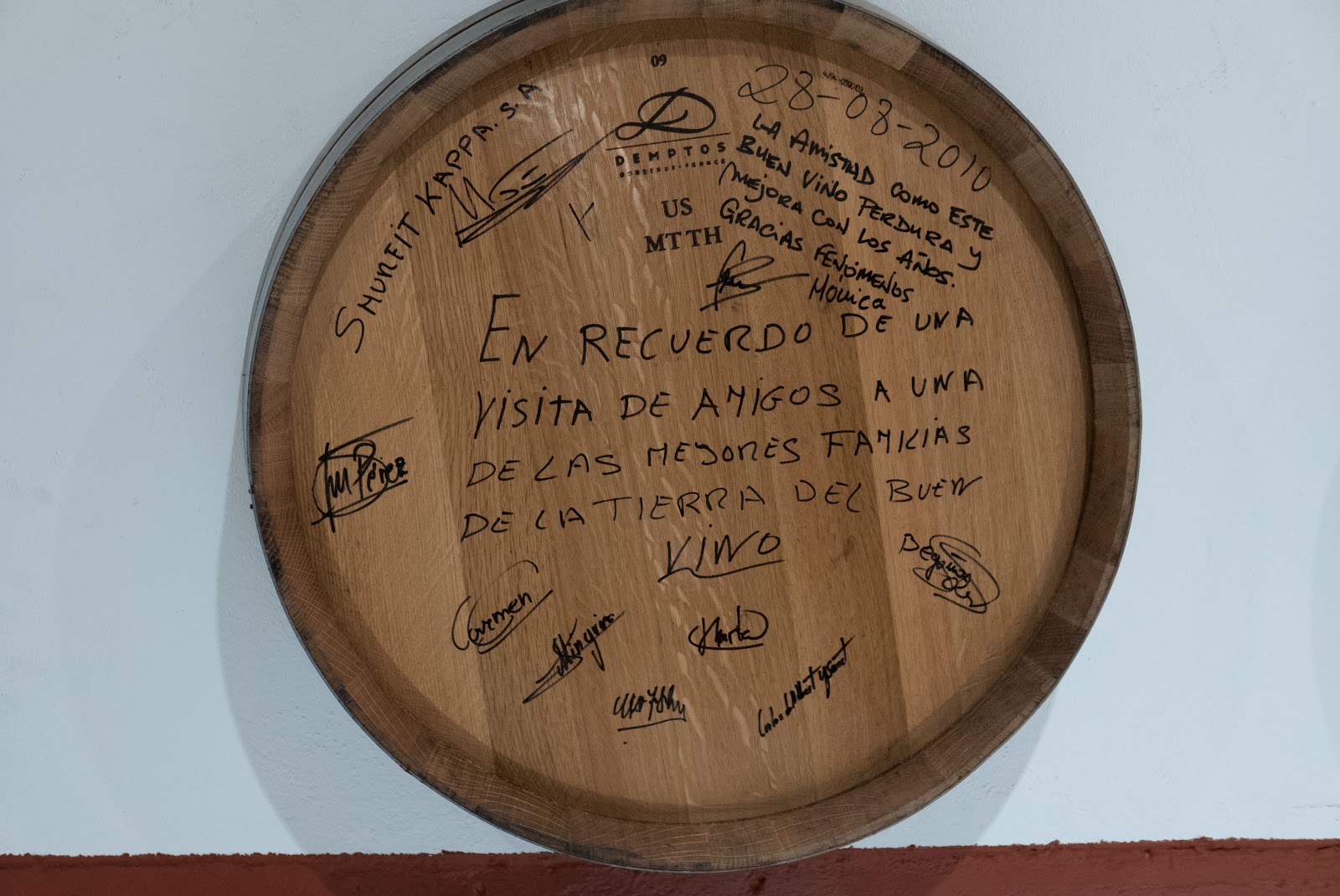
Signing barrels especially
if you buy the entire thing is a popular show of affection.


 But before we eat, a little history. Two rivers, one large, the Duero, and one
small, the Duratón meet and define the existence of Penafiel. The Duratón with its mills, orchards and
bridges lies at the heart of the village. The origin of the Penafiel Mill goes
back at least to the twelfth century, as recorded in a letter preserved in the
diocesan archives of Valladolid. The
original mill burned. On August 20, 1878
Don Pedro de la Torre Hortigüela acquired the property and rebuilt current
structure of the mill. Fast forward to
1995, the mill was restored and converted into a restaurant where one can enjoy
lechazo asado. Book ahead if you want lamb.
But before we eat, a little history. Two rivers, one large, the Duero, and one
small, the Duratón meet and define the existence of Penafiel. The Duratón with its mills, orchards and
bridges lies at the heart of the village. The origin of the Penafiel Mill goes
back at least to the twelfth century, as recorded in a letter preserved in the
diocesan archives of Valladolid. The
original mill burned. On August 20, 1878
Don Pedro de la Torre Hortigüela acquired the property and rebuilt current
structure of the mill. Fast forward to
1995, the mill was restored and converted into a restaurant where one can enjoy
lechazo asado. Book ahead if you want lamb.